Growing a business without an email list is like building a house without a foundation. If you want consistent leads, repeat customers, and a direct line to your audience, you need to know how to build email list for business from the ground up. Most business owners struggle because they either skip the setup process or rely too heavily on social media platforms they do not own. This guide covers every step you need, from choosing the right email marketing service to attracting your first 1,000 subscribers, with practical tactics that actually work in 2026.
What does it mean to build an email list for business? Building an email list means collecting the contact details of people who have shown genuine interest in your products or services, so you can market to them directly without depending on third-party platforms.
Why Does Every Business Need an Email List Right Now?
Social media reach has declined sharply over the last few years. Organic posts on Facebook and Instagram now reach a small fraction of your followers. An email list is something you own completely. No algorithm change can wipe it out overnight.
Email marketing consistently delivers one of the highest returns of any digital channel. For every pound or dollar spent, businesses regularly report returns that far exceed paid advertising or social media campaigns.
Beyond the numbers, email gives you a personal channel. You are not competing with hundreds of other posts in a feed. You land directly in someone’s inbox, at a time they have chosen to check it.
How to Build an Email List for Business: Step-by-Step From Zero
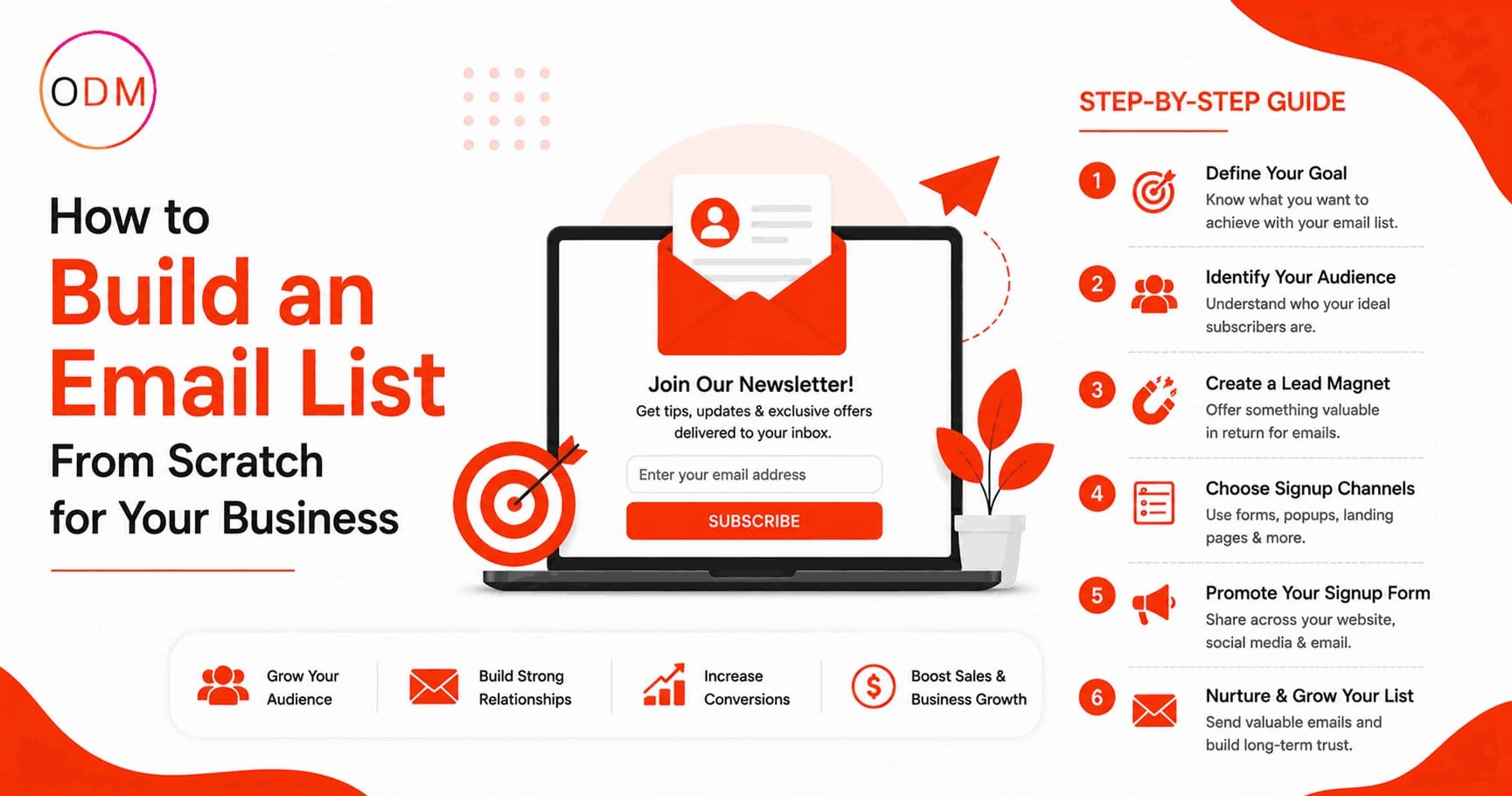
This is the section most guides get wrong. They tell you to “add a signup form” and leave it at that. Here is a practical, numbered process that works whether you are starting today or rebuilding a stale list.
Step 1: Choose a reliable email marketing service
Before collecting a single email, you need infrastructure. An email marketing service stores your contacts, sends your campaigns, manages unsubscribes, and tracks performance. Popular options include Mailchimp, ActiveCampaign, ConvertKit, and Klaviyo. Each has different pricing tiers and automation depth, so choose based on your business size and how frequently you plan to send.
Step 2: Define your target audience clearly
Who exactly do you want on your list? An email list full of people who have no interest in your offer is a cost, not an asset. Write down the specific job title, problem, or goal your ideal subscriber has. This shapes every piece of content and every lead magnet you create.
Step 3: Create a lead magnet that solves one real problem
A lead magnet is something free and immediately valuable that you offer in exchange for an email address. A checklist, short guide, discount code, free audit, or template all work well. The lead magnet must solve one specific problem, not try to cover everything. Specific lead magnets convert far better than generic ones.
Step 4: Set up your signup forms and landing pages
Your email marketing service will let you build embedded forms and standalone landing pages. Place signup forms in high-traffic areas: your website header, blog posts, exit pop-ups, and your homepage footer. Each form should clearly state what the subscriber gets and how often you will email them.
Step 5: Drive traffic to your signup pages
No traffic means no subscribers. Use a combination of SEO content, social media posts, paid ads, and partnerships with other businesses in your space. Guest posting on relevant blogs and being featured in other newsletters are often underrated but very effective methods.
Step 6: Nurture with a welcome email sequence
The moment someone subscribes, send them a series of three to five emails over the first two weeks. Introduce your brand, deliver the lead magnet, share your best content, and make a soft offer. First impressions on email are as important as first impressions in person.
What Are the Best Email List Building Tips That Actually Work?
A lot of advice about email list building is either outdated or too vague to act on. These email list building tips are based on what works for real businesses in 2026, not theories from five years ago.
Use content upgrades in your blog posts
A content upgrade is a lead magnet that is directly related to the blog post someone is already reading. If a reader is on a post about Instagram strategy, offer them a free Instagram content calendar. This relevance makes conversion rates dramatically higher than a generic sidebar form.
Run a referral programme for your subscribers
Encourage existing subscribers to refer friends in exchange for a reward. Tools like SparkLoop integrate with most email marketing service platforms and automate this completely. Word-of-mouth remains one of the most trusted forms of acquisition.
Add email capture to your social media profiles
Your Instagram bio, LinkedIn page, and Facebook about section should all include a link to your lead magnet or email signup page. People who follow you on social are already warm audiences. Many businesses miss this completely.
Host a free webinar or live event
Registration requires an email address. A free 45-minute training session on a topic your audience cares about can add hundreds of highly engaged subscribers in a single day. Follow up the next day while the event is still fresh in their minds.
Use exit-intent pop-ups strategically
When a visitor is about to leave your website, an exit-intent pop-up can capture their email before they go. These convert well when the offer is genuinely useful and the copy is direct. Avoid vague messages like “subscribe for updates.” Instead, say exactly what they will receive.
Applying even three of these email list building tips consistently for 90 days will produce visible results for most businesses.
How a Real Business Built 5,000 Subscribers in 6 Months
Consider a small accounting firm that wanted to stop relying on referrals and start generating inbound leads online. They had no email list, no lead magnet, and no idea where to begin.
They started by partnering with a reputable email list building agency to map out their audience and create a targeted lead magnet, a free tax-saving checklist for self-employed professionals. They selected an email marketing service, set up a simple landing page, and began promoting the checklist through LinkedIn posts and a weekly blog.
Within three months, they had 2,200 subscribers. By month six, that number had crossed 5,000. More importantly, around 8% of those subscribers had enquired about their paid services.
The key was not spending heavily on ads. The accounting firm invested in the right strategy, the right tools, and consistent execution. The email list became their most reliable source of new client enquiries, operating around the clock without additional effort.
How to Choose the Right Email Marketing Service for Your Business
Not all platforms are built the same. The right email marketing service for a freelancer is not the same as the one suited to a growing eCommerce store or a B2B service business.
Consider these factors before committing:
Automation depth: Does the email marketing service allow you to build multi-step sequences triggered by subscriber behaviour? This matters for onboarding, sales funnels, and re-engagement.
Deliverability rates: An email marketing service with poor deliverability means your messages land in spam folders. Check independent reviews and deliverability benchmarks before choosing.
Integration options: Your email marketing service should connect easily with your website platform, CRM, and checkout system. Gaps in your tech stack create manual work and errors.
Pricing structure: Some platforms charge by contacts, others by emails sent. If you plan to build a large list and email infrequently, contact-based pricing will cost you more. Run the numbers before signing up.
Customer support: When your campaign fails to send or a form stops working, you need responsive support. Test the support quality before committing to any email marketing service on a long-term plan.
Should You Hire an Email List Building Agency?
At some point, many businesses realise that building and managing an email list well takes more time and expertise than they have in-house. An email list building agency handles the strategy, setup, copywriting, and ongoing optimisation so your team can focus elsewhere.
An email list building agency is worth considering when you have tried to build your list but growth has stalled, when your open rates are low and you do not know why, or when you simply want faster results than a DIY approach allows.
A professional email list building agency brings experience from working across multiple industries and knows what lead magnets, sequences, and growth tactics produce results in your sector specifically. This is not something a general marketing assistant can replicate.
Ask yourself honestly: have your current email list building efforts produced the results you expected? If the answer is no, or if you have not started at all, speaking to a specialist email list building agency is a practical next step.
At Online Dot Marketing, we work with businesses at every stage of list building, from zero subscribers to scaling an existing list. Get in touch with our team to find out how we can help you build a list that generates real enquiries.
Ready to Build an Email List That Actually Grows Your Business?
If you have reached this point, you already understand that building an email list is not optional for serious business growth. The businesses generating consistent online revenue in 2026 are the ones that own their audience.
Getting the setup right from the start saves months of frustration. Choosing the wrong email marketing service, using a weak lead magnet, or skipping your welcome sequence are mistakes that cost you subscribers and revenue over time.
At Online Dot Marketing, we help businesses across industries build email lists that generate real leads, not just vanity numbers. Whether you need full strategy and setup or ongoing management and growth, our team has the expertise to make it happen.
Contact Online Dot Marketing today and let us build you an email list that works as hard as you do.
Frequently Asked Questions About Building an Email List for Business
How long does it take to build an email list from scratch?
Most businesses see their first meaningful results, around 100 to 500 subscribers, within 60 to 90 days of consistent effort. Growth accelerates significantly after the first 1,000 subscribers, as referrals and social proof start working in your favour alongside your core tactics.
How do I know how to build email list for business without buying contacts?
Buying email lists is ineffective and potentially illegal under GDPR. Organic list building through lead magnets, content, and social traffic produces far better results because every subscriber has actively chosen to hear from you, making them far more likely to engage and convert.
What is the best email marketing service for a small business?
For most small businesses starting out, Mailchimp or ConvertKit offer a solid balance of features and affordability. As your list grows and your automation needs increase, platforms like ActiveCampaign or Klaviyo become more suitable depending on whether you run eCommerce or service-based operations.
What are the most important email list building tips for beginners?
Start with one strong lead magnet, place signup forms in high-traffic areas on your website, and send a welcome sequence immediately after someone subscribes. These three email list building tips alone outperform most complicated strategies that beginners attempt too early.
When should I hire an email list building agency instead of doing it myself?
Hire an email list building agency when your DIY efforts have stalled, when you lack the time to execute consistently, or when you need faster results with lower trial and error. An experienced email list building agency reduces the learning curve and helps you avoid costly mistakes early on.
How often should I email my list once it is built?
Most businesses perform well emailing once or twice per week. Consistency matters more than frequency. Subscribers who hear from you regularly are less likely to forget who you are. Your email marketing service will show you open rate trends that help you find the right frequency for your specific audience.